
博客

临场实务-职场过负荷
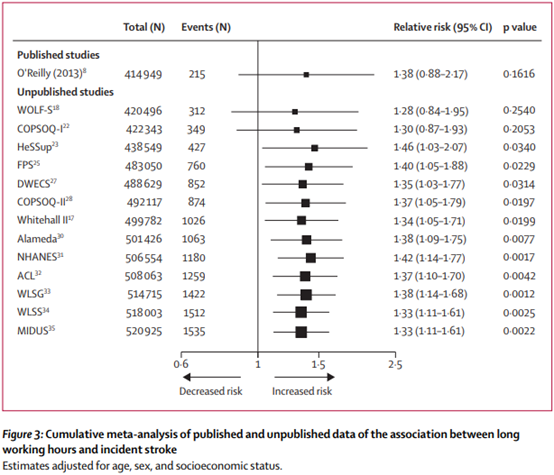
长时间工作导致脑中风及增加冠状动脉心脏病风险
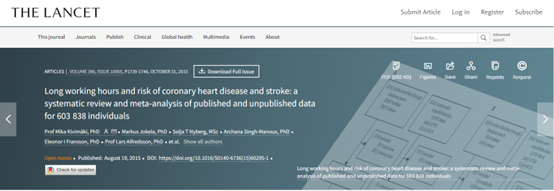
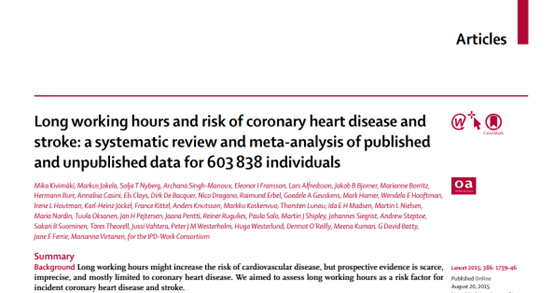
2015发表于THE LANCET的一篇研究,结论如下:
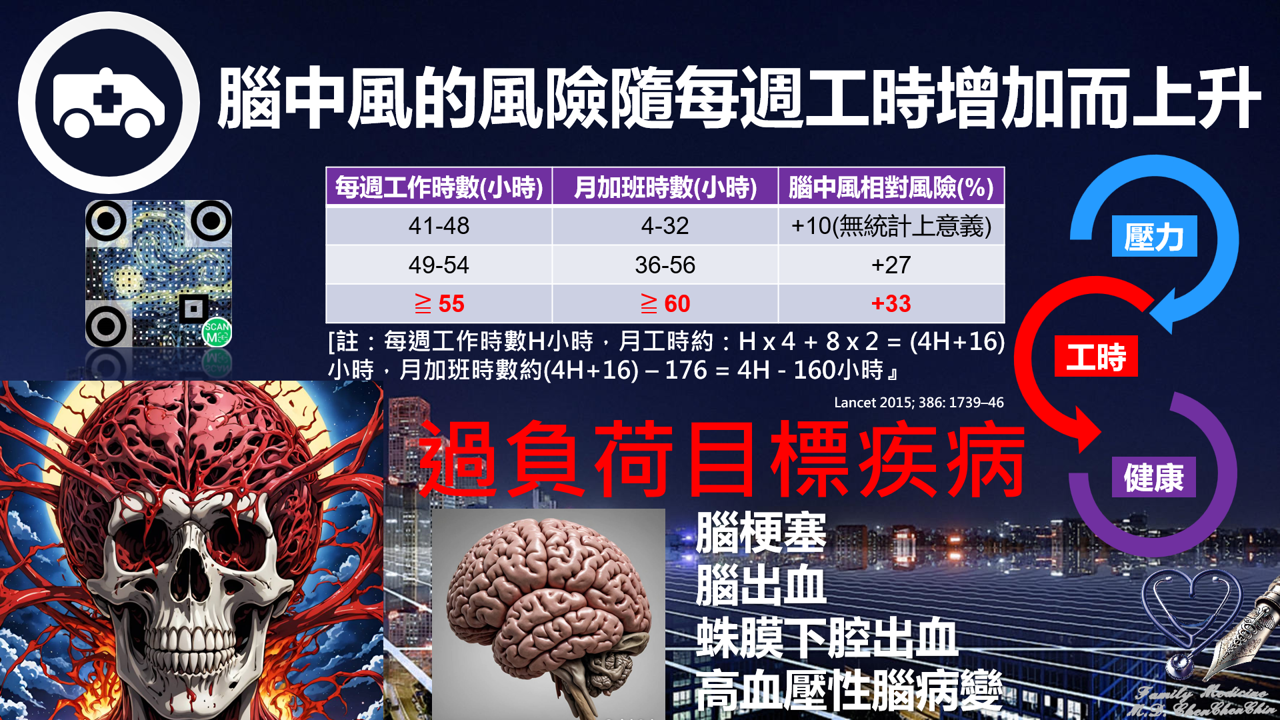
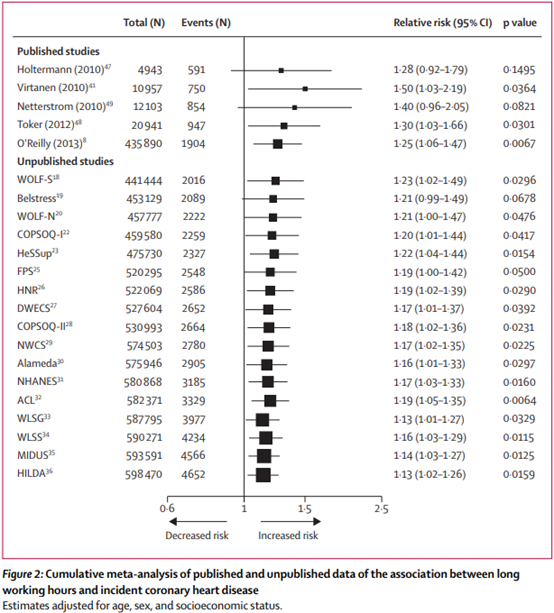
『相较于周工时35-40小时族群,长时间工作(每周工作时数≧55小时,月加班时数约≧60小时)。脑中风相对风险增加33%,冠状动脉心脏病相对风险增加13%。 』
每周工作时数≧55小时,月工时约≧ 55 x 4 + 8 x 2 = 236小时,月加班时数约≧ 236 - 176= 60小时。
『长时间工作导致脑中风增加的风险大于导致冠状动脉心脏病增加的风险。 』
『脑中风的风险和每周工作时数成正比,风险随着每周工时增加而上升。 』
| 每周工作时数(小时) | 月加班时数(小时) | 脑中风相对风险(%) |
41-48 | 4-32 | +10(无统计学意义) |
49-54 | 36-56 | +27 |
≧ 55 | ≧ 60 | +33 |
[注:每周工作时数H小时,月工时约:H x 4 + 8 x 2 = (4H+16)小时,月加班时数约(4H+16) – 176 = 4H - 160小时』
『缺乏活动(physical inactivity)、长时间久坐和大量饮酒增加脑中风机率』
冠状动脉心脏病的追踪时间平均为8·5年,共记录4768起事件;
脑中风的追踪时间平均为7·2年,共记录1722个事件。
在两项研究中,大量追踪者中断研究也可能导致低估关联性,然而造成的统计误差在总数据中可忽略。
研究纳入影响的因子有:年龄、性别、社会经济地位、吸烟、BMI、身体活动(physical activity)、饮酒量,但没考虑到个人对盐份摄取量及其他慢性病因子。
www.thelancet.com Vol 386 October 31, 2015
Exposure to long working hours was based on self-report and was measured only once. In two studies, high loss to follow-up could also have contributed to an underestimation of associations, although this bias seemed to be small or absent in the total data.
We had harmonised data for multivariable adjustments for age, sex, SES, smoking, BMI, physical activity, and alcohol consumption, but not for salt intake and blood-based risk factors. Ascertainment of coronary heart disease and stroke varied, ranging from medical records of brain imaging and autopsy to repeated self-report questionnaires outcome misclassification is possible. However, the absence of heterogeneity in the study-specific estimates, and the uniform findings in the analyses stratified by method of ascertainment, suggest that this misclassification is not a major source of bias.
www.thelancet.com Vol 386 October 31, 2015

陈承勤医师
致力于改善工作环境中的危害风险,通过创新计画和实证研究,综合个人健康风险及职场工作适能评估,给予员工及企业最专业的建议,秉持着「医疗永远是天秤两边去抉择,利大于弊:建议,弊大于利:不建议」的原则。因此在每项建议背后,皆是经过审慎评估与专业判断的结果,帮助企业减少职场伤害,提升员工幸福感。健康的员工不仅能提升企业的生产力,还能打造和谐的工作氛围。
不蹭流量、不搞话术、不带风向、不卖焦虑——秉持每一句卫教、每一篇文章、每一本书、每一堂课、每一个理论、每一个信念、每一个行动,都对得起实证医学、从不违反医疗伦理、皆是能落地的健康实践策略,以及日复一日身体力行的良心,以医疗伦理为秤、实证医学为盾,分享每一篇值得信赖的内容,也诚挚欢迎各界进行学术交流与讨论。